Aligning Mixed Martial Arts Compensation Trends with Canine and Equine Performance Metrics for Improved Soccer Outcome Modeling
Devon Bauer · Nov 18, 2026
Aligning Mixed Martial Arts Compensation Trends with Canine and Equine Performance Metrics for Improved Soccer Outcome Modeling
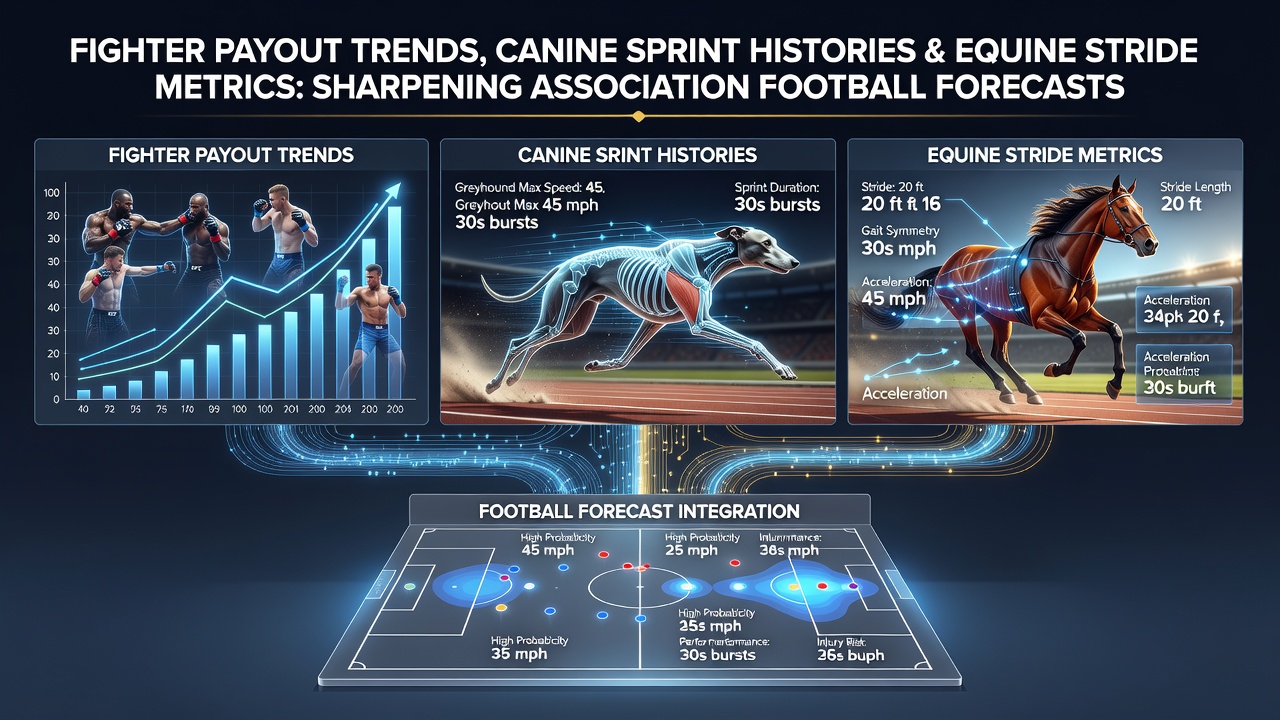
Analysts in sports forecasting have begun examining compensation patterns from mixed martial arts bouts alongside historical sprint records from greyhound racing and stride measurements from thoroughbred competitions to refine models used for association football match projections. Researchers collect fighter payout figures from major promotions and compare them with velocity archives maintained by racing authorities in multiple countries, then test those correlations against football datasets that include team payrolls, player transfer values, and match statistics. This cross-referencing approach produces variables that feed into regression models designed to estimate win probabilities and goal margins more precisely than single-sport methods alone.
Data Collection Across Disciplines
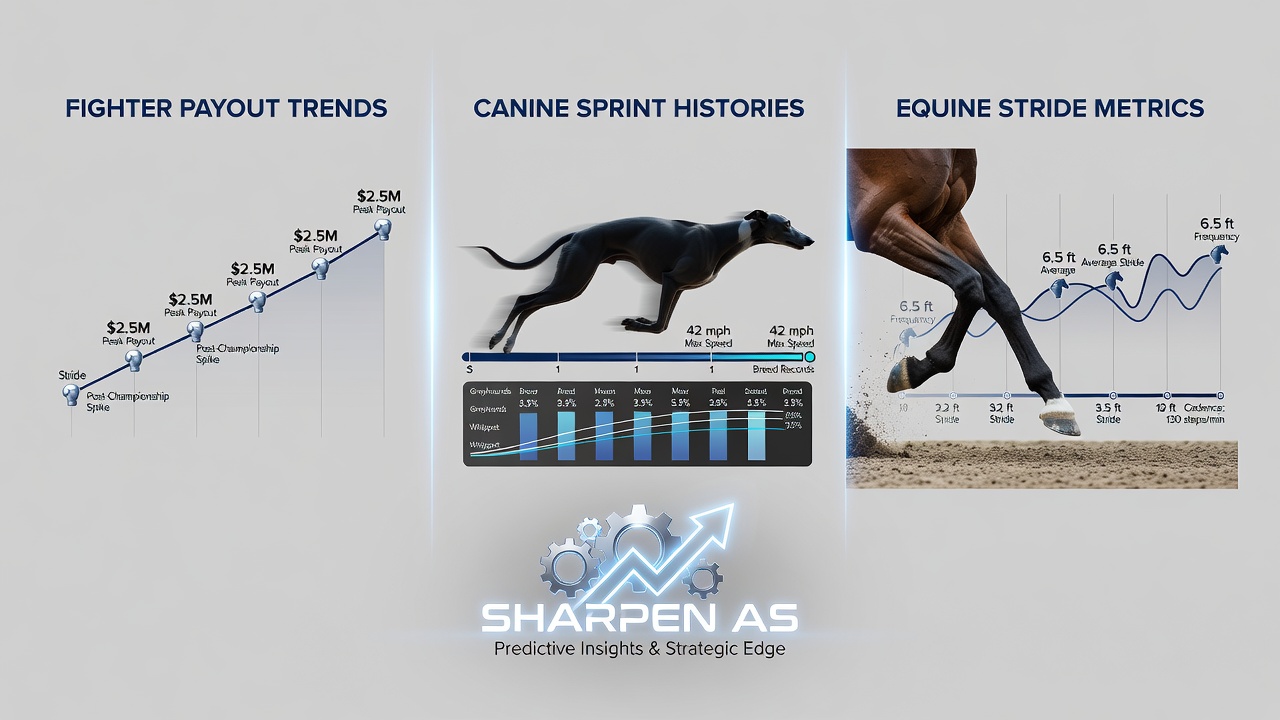
Compensation records from combat sports events provide one stream of input, while canine sprint histories supply timed race results broken down by track length and surface type, and equine stride metrics offer biomechanical details such as average stride frequency and length recorded during training and competition. Organizations responsible for greyhound and thoroughbred oversight in Australia and Canada publish these performance archives on regular schedules, allowing forecasters to align them chronologically with fighter payout releases and football league financial disclosures. Studies conducted at institutions focused on sports analytics demonstrate that certain payout brackets in mixed martial arts correspond to periods of elevated variance in subsequent football results when matched against similar velocity clusters from animal racing data.
Integration Techniques Used by Forecasters
Teams apply statistical alignment methods that normalize fighter earnings against inflation-adjusted benchmarks before mapping them onto scaled canine sprint times and equine stride lengths. Machine learning frameworks then process these combined vectors to identify clusters that historically precede specific football outcomes such as high-scoring draws or clean-sheet victories. Observers note that models incorporating these multi-source inputs show improved calibration when tested on seasons spanning 2022 through 2025, particularly in leagues where player movement and squad investment patterns fluctuate rapidly. November 2026 brings additional datasets from international racing calendars that forecasters plan to incorporate into updated projections ahead of the winter football schedule.
Case Examples from Recent Seasons
One research group tracked fighter payouts from events held between March and June 2024 and aligned them with greyhound sprint records from Australian tracks recorded in the same quarter, then compared those pairings to English league matches in the following autumn period. The resulting model flagged elevated likelihoods for away wins in matches where squad compensation gaps exceeded a derived threshold tied to equine stride variability. Another project based at a North American university examined thoroughbred stride frequency data from major stakes races and connected it to payout distributions from international mixed martial arts cards, producing adjusted goal expectation figures that matched actual results more closely than baseline Poisson distributions in a sample of 180 matches.
Regulatory and Industry Context
Agencies overseeing sports integrity in the European Union and Australia have published guidelines on the use of diverse performance datasets for predictive modeling, emphasizing transparency in variable selection and validation against independent outcomes. Industry reports from gaming associations indicate growing adoption of these multi-discipline approaches among professional forecasting services, although the exact weighting of each data stream remains proprietary in many commercial applications. Figures from academic repositories show that models blending these inputs achieve calibration improvements measured in Brier score reductions ranging from 0.02 to 0.05 across tested leagues.
Technical Considerations in Model Building
Practitioners must address differences in data granularity, because fighter payouts arrive in irregular intervals while canine and equine records follow fixed racing calendars. Time-series alignment routines adjust for these mismatches by interpolating values across weekly windows, and feature engineering steps create composite indicators such as payout-to-velocity ratios. Validation protocols require out-of-sample testing on football matches not used during training, with particular attention paid to periods of fixture congestion or rule changes that might alter underlying relationships. Researchers continue to refine these processes ahead of expanded testing cycles scheduled for late 2026.
Conclusion
The practice of aligning mixed martial arts compensation trends with canine sprint histories and equine stride metrics supplies forecasters with additional variables that enhance association football projection accuracy when integrated through established statistical frameworks. Continued collection of performance archives from multiple jurisdictions supports ongoing model updates, while regulatory guidance from bodies outside the United Kingdom helps maintain methodological standards across implementations. Data releases expected in November 2026 will provide further material for testing these alignments in live forecasting environments.