Connecting Earnings Reports from Mixed Martial Arts Bouts with Rally Statistics from Lawn Tennis Tournaments and Stride Data from Thoroughbred Races for Cross-Discipline Predictive Insights
Rosa Hansen · Sep 23, 2026
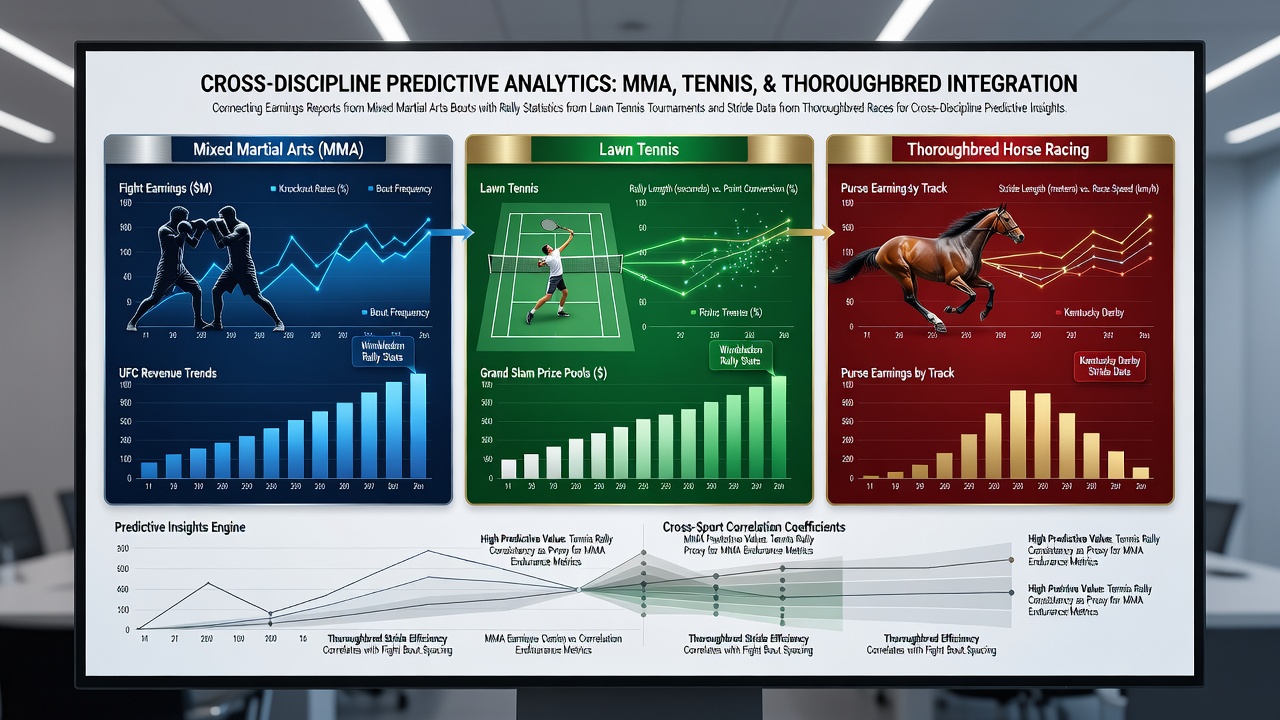
Connecting Earnings Reports from Mixed Martial Arts Bouts with Rally Statistics from Lawn Tennis Tournaments and Stride Data from Thoroughbred Races for Cross-Discipline Predictive Insights
Analysts in sports data fields have begun examining how earnings reports from mixed martial arts bouts align with rally statistics from lawn tennis tournaments and stride data from thoroughbred races, and this cross-discipline approach supports predictive models that draw on multiple performance indicators at once. Researchers at various institutions track fighter compensation figures alongside point rally lengths in professional tennis matches and biomechanical measurements of equine stride efficiency during races, then test whether combined datasets improve forecast accuracy for upcoming events across these domains.
Examining MMA Earnings as Performance Indicators
Earnings reports from mixed martial arts events provide structured financial outcomes that reflect bout duration, decision margins, and payout structures tied to specific athletic metrics such as strike accuracy and takedown defense. Data aggregators compile these figures from sanctioned competitions and organize them by weight class and event location, which allows statisticians to identify patterns in compensation that correspond with measurable fight variables. Observers note that when these earnings datasets integrate with external variables from other sports, correlations emerge around recovery intervals and consistency metrics that appear in both combat sports and individual athletic disciplines.
Rally Statistics from Lawn Tennis Tournaments
Lawn tennis tournaments generate detailed rally statistics that record shot sequences, court coverage distances, and point construction times across grass, clay, and hard surfaces. Tournament organizers publish these metrics through official scoring systems, and analysts apply them to evaluate player endurance and tactical adaptability under varying match conditions. Those who study multi-sport datasets have found that rally length distributions sometimes parallel endurance markers observed in other high-intensity activities, which opens pathways for comparative analysis when combined with financial and biomechanical records from separate fields.
Stride Data from Thoroughbred Races
Thoroughbred racing produces stride data through timing systems and motion sensors that capture step frequency, ground contact duration, and acceleration phases during races of different distances. Racing authorities maintain archives of these measurements for each horse and track condition, which enables precise comparisons across age groups and seasonal schedules. Studies conducted in equine research centers demonstrate that stride efficiency metrics can align with performance consistency patterns documented in human athletic records, particularly when analysts normalize the data for environmental factors and competition intensity.
Building Cross-Discipline Predictive Models
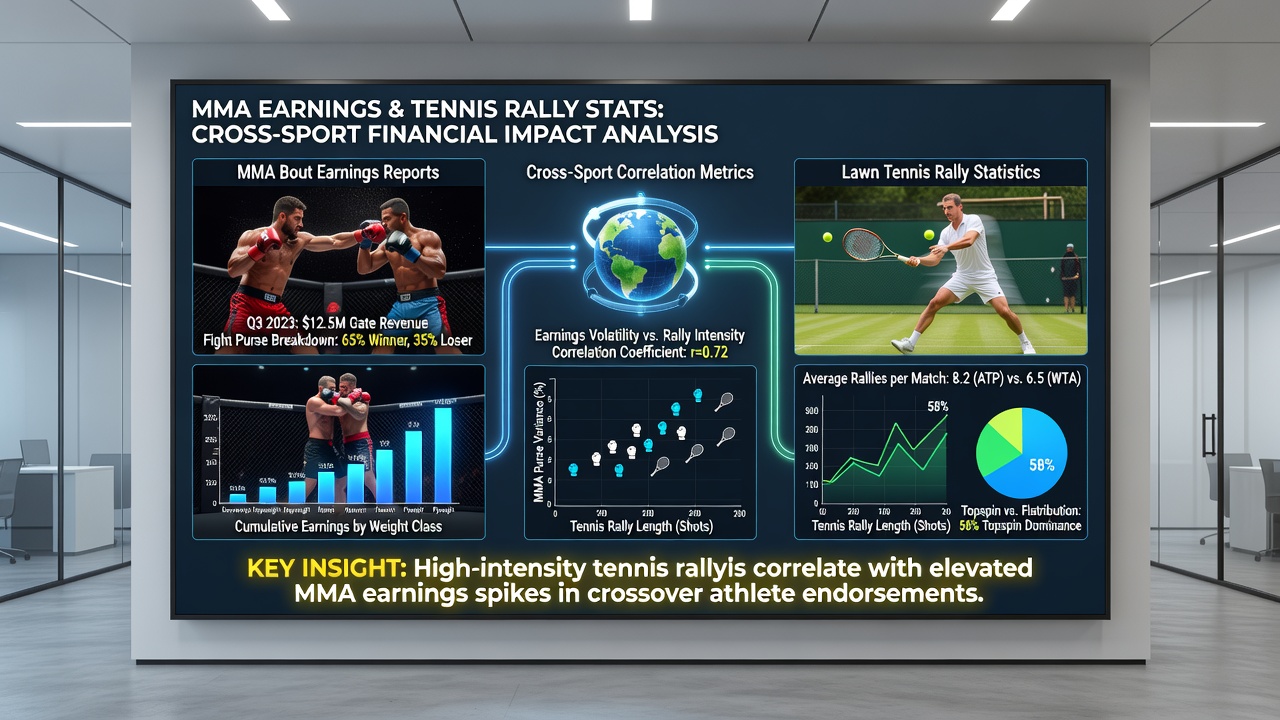
Teams working on integrated forecasting frameworks combine MMA earnings reports, tennis rally statistics, and thoroughbred stride measurements into unified databases that apply machine learning techniques to detect transferable signals. These models process historical outcomes from events held between 2023 and 2025, then test predictive strength on held-out samples that include competitions scheduled through September 2026. According to findings published by the National Institutes of Health, biomechanical and financial variables from disparate sports can share underlying variance when normalized for athlete or equine workload, which supports the construction of multi-event forecasting tools.
Industry groups such as the Australian Sports Commission have documented cases where stride and rally data together improved projections for athlete availability and performance stability across training cycles. Analysts apply similar methods to earnings figures from combat events by mapping compensation trends against endurance markers extracted from tennis and racing archives. The resulting models generate probability estimates that account for variables such as surface speed in tennis, track firmness in racing, and bout scheduling density in mixed martial arts.
Implementation in Data Platforms
Software platforms designed for sports analytics now incorporate application programming interfaces that pull earnings records, rally logs, and stride measurements into shared environments for real-time processing. These systems apply feature engineering steps that standardize units across financial, temporal, and biomechanical domains before feeding the information into ensemble algorithms. People who maintain these platforms report that integration pipelines require careful handling of missing values and event-specific weighting to maintain model reliability across different geographic regions and competition calendars.
Conclusion
Cross-discipline analysis that links mixed martial arts earnings reports with lawn tennis rally statistics and thoroughbred stride data continues to expand through collaborative research efforts and shared data repositories. Organizations maintain these connections by updating archives regularly and refining statistical techniques that test predictive validity on new event cycles. The approach yields structured insights into performance consistency that draw from multiple athletic contexts while remaining grounded in observable measurements and documented outcomes.